
How to Make Your Website More Visible
If you want to grow your digital presence, mastering SEO for beginers is the perfect place to start. Every website owner dreams of reaching the first page of search results. However, achieving that goal requires a clear understanding of how search engines operate. Therefore, this comprehensive guide will walk you through everything you need to know.
Firstly, search engine optimization does not have to be overly complicated. Many people feel overwhelmed by technical jargon when they first start. Fortunately, you can easily grasp the fundamentals with a step-by-step approach. As a result, you will quickly learn how to make your website more visible to your target audience.
Why SEO for beginers is Essential Today
Understanding SEO for beginers is absolutely crucial for any modern business. Whenever people need a product or service, they immediately turn to search engines. Consequently, if your website does not appear in those results, you are missing out on valuable traffic. Furthermore, organic traffic is essentially free, making it highly cost-effective for long-term growth.
In addition, ranking well builds instant trust with your potential customers. Users naturally trust websites that Google places at the top of the search results. Therefore, investing time in a beginner SEO guide will yield massive dividends for your brand. Ultimately, good optimization strategies will transform your website into a reliable lead generation machine.
Understanding Search Engine Optimization Basics
Before diving into advanced tactics, you must understand how search engines actually function. Google and Bing use automated bots to explore the internet constantly. These bots read your web pages and categorize the information they find. Consequently, your goal is to make this process as easy as possible for them.
Learn more about our SEO basics Context:What is Digital Marketing? The Ultimate Tech Guide
Crawling and Indexing Explained
Firstly, crawling is the discovery phase of the search engine process. Search engine bots travel across the web by following links from one page to another. Afterward, they store the data they find in a massive database. This storage process is known as indexing.
Therefore, if your site is not indexed, it cannot appear in search results at all. You must ensure your website navigation is clear and logical. Additionally, you should submit an XML sitemap to Google Search Console to speed up this discovery phase. As a result, search engines will easily find and index your new content.
Core Ranking Factors You Should Know
Once your pages are indexed, search engines must decide where to rank them. Google uses hundreds of different factors to determine these rankings. However, relevance and authority are the two most important elements to consider. Firstly, your content must directly answer the user’s specific search query.
Secondly, your website must demonstrate authority in its specific niche or industry. You can build this authority by acquiring links from other reputable websites. Furthermore, providing an excellent user experience keeps visitors on your page longer. Consequently, this signals to Google that your content is valuable and deserves a higher ranking.
Keyword Research: The Foundation of SEO
Keyword research is the absolute bedrock of successful SEO for beginers. You cannot optimize your website if you do not know what your audience is searching for. Therefore, you must identify the exact words and phrases your potential customers use. Fortunately, numerous free and paid tools can help you uncover this valuable data.

Long-tail vs. Short-tail Keywords
When conducting research, you will encounter both short-tail and long-tail keywords. Short-tail keywords are brief, general terms like “shoes” or “marketing.” Consequently, they have massive search volumes but are incredibly competitive. Therefore, new websites struggle significantly to rank for these broad terms.
In contrast, long-tail keywords are longer, highly specific phrases. For example, “women’s running shoes for flat feet” is a perfect long-tail phrase. Furthermore, these specific queries indicate a much higher intent to purchase or act. Thus, focusing on long-tail search engine optimization for novices is a highly effective strategy.
On-Page SEO Techniques You Can Apply Immediately
On-page optimization refers to all the actions you take directly within your website. This includes tweaking your text, adjusting your headers, and formatting your code. Therefore, implementing on-page SEO for beginers gives you complete control over your ranking potential. Most importantly, it ensures your content directly aligns with your chosen keywords.
You can also read: https://ozdndigitals.com/how-to-write-compelling-headlines-the-ultimate-guide/
https://ozdndigitals.com/how-to-write-engaging-blog-post-content-that-keeps-readers-coming-back/
Optimizing Title Tags and Meta Descriptions
Your title tag is the clickable blue link that appears in search engine results. First and foremost, it must be catchy, accurate, and contain your primary keyword. Furthermore, you should keep it under 60 characters so it does not get cut off. Consequently, a great title tag dramatically improves your click-through rate.
Similarly, the meta description is the brief text snippet located just below the title. While it is not a direct ranking factor, it heavily influences whether users click. Therefore, you should write compelling meta descriptions that summarize the page’s value. In addition, naturally include your target keywords to make the snippet highly relevant.
Formatting Content with Headings
Headings are incredibly important for both human readers and search engine bots. You should always use exactly one H1 tag for your main page title. After that, use H2 and H3 tags to logically break up your subsections. As a result, your text becomes much easier to scan and digest.
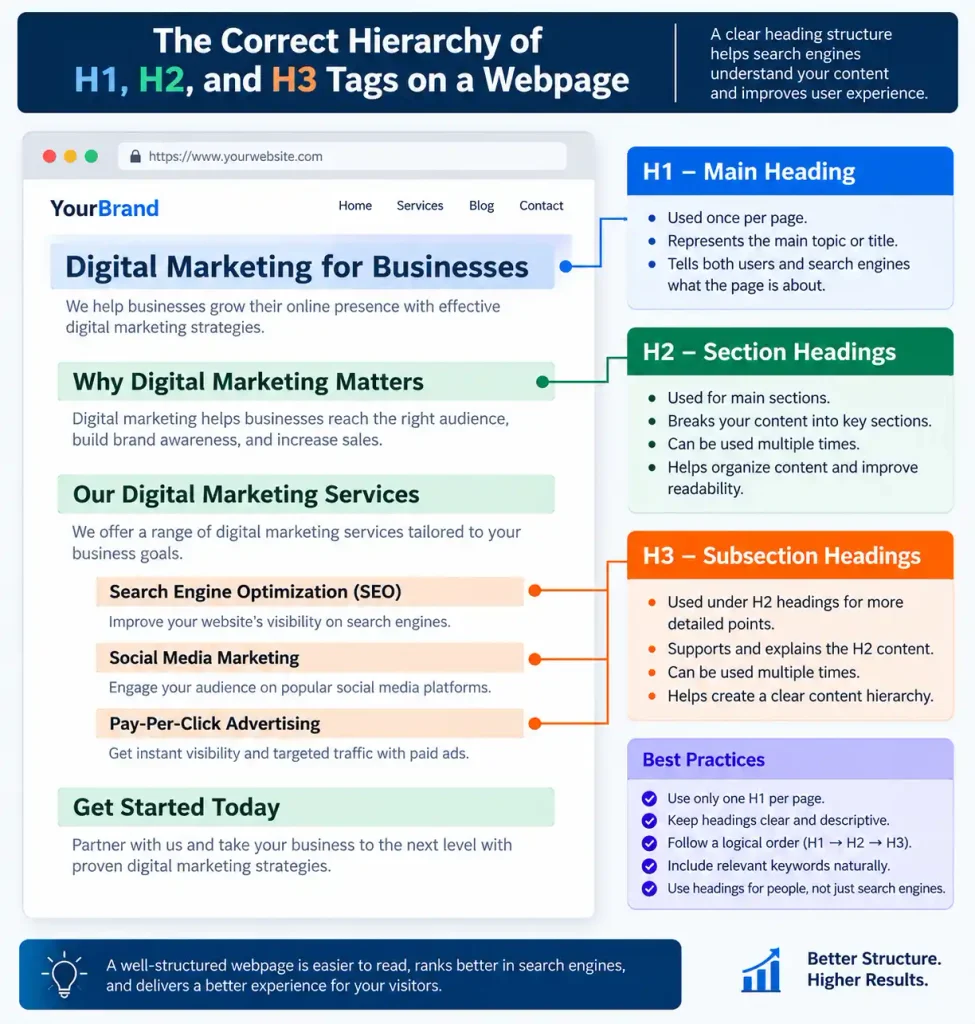
Moreover, headings provide excellent opportunities to naturally insert your related keyphrases. However, you must avoid awkwardly forcing keywords where they do not belong. Instead, focus on creating descriptive headings that genuinely guide the reader. Consequently, search engines will easily understand the structural outline of your content.
Off-Page SEO and Building Authority
Off-page optimization involves all the actions taken outside of your own website. Primarily, this revolves around earning high-quality backlinks from other reputable sites. Therefore, off-page SEO for beginers is often the most challenging part of the process. However, it is also the most rewarding when executed correctly.
You may also like :
Professional Brand Identity: Why Your Business Needs One
What Is Digital Marketing for Businesses and Why Do You Need It?
Earning Quality Backlinks
A backlink is simply a hyperlink from another website pointing back to yours. Google essentially views these links as votes of confidence in your content. Furthermore, links from high-authority websites carry significantly more weight than links from small blogs. Therefore, you should prioritize quality over quantity when building your link profile.
For example, you can earn backlinks by publishing highly shareable, original research. Alternatively, you can reach out to industry blogs and offer to write guest posts. In addition, building genuine relationships with other webmasters naturally leads to more linking opportunities. Consequently, your website’s overall domain authority will steadily increase over time.
Technical SEO Made Simple
Technical SEO focuses on the backend structure and performance of your website. Many people assume this phase is too difficult for a beginner SEO guide. However, you only need to focus on a few key elements to see massive improvements. First and foremost, your website must be fast, secure, and mobile-friendly.
Improving Page Loading Speed
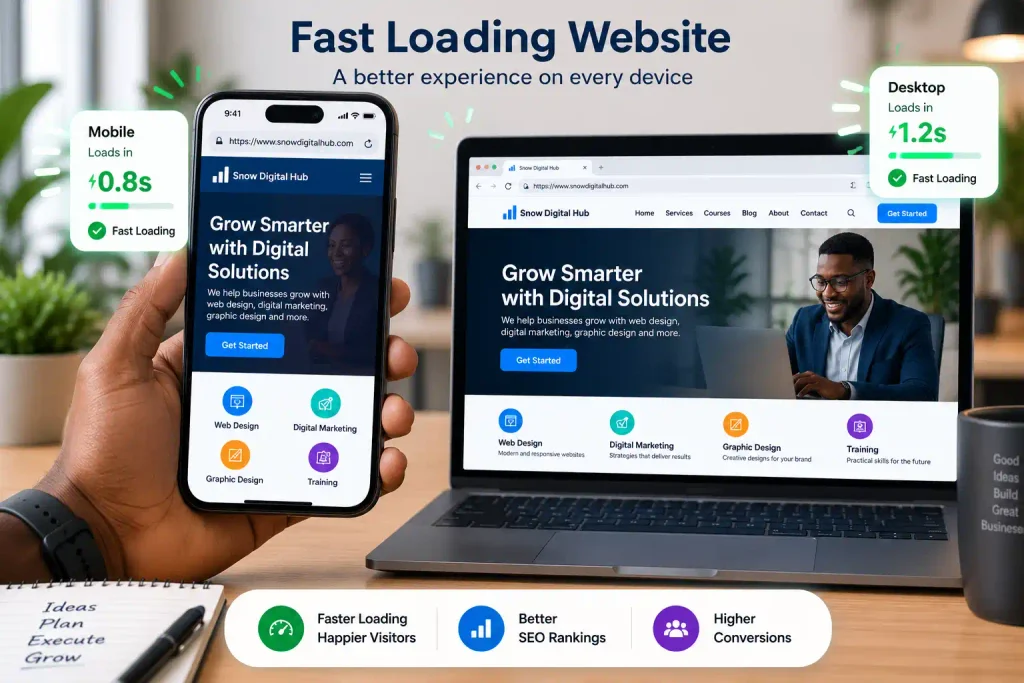
Website speed is a confirmed ranking factor for major search engines. If your page takes too long to load, frustrated visitors will immediately leave. Consequently, this high bounce rate signals to Google that your site offers a poor experience. Therefore, you must actively work to decrease your page loading times.
Firstly, you can compress your images before uploading them to your server. Secondly, you should utilize browser caching and minimize your heavy code files. In addition, upgrading to a high-quality web hosting provider makes a massive difference. As a result, your site will load instantly, keeping users happily engaged with your content.
Prioritizing Mobile-Friendliness
Today, more than half of all internet traffic comes from mobile devices. Because of this, Google now uses mobile-first indexing to evaluate websites. Therefore, Google looks at the mobile version of your site before the desktop version. Consequently, having a responsive design is absolutely non-negotiable in today’s digital landscape.
Furthermore, you must ensure your text is easily readable on small screens. Buttons and links should be large enough to tap with a thumb comfortably. Moreover, avoid using intrusive pop-ups that ruin the mobile browsing experience. Ultimately, a seamless mobile experience directly translates to higher search engine rankings.
Creating High-Quality, User-Focused Content
Content is undeniably the king of the digital marketing world. Even the best technical SEO for beginers cannot save poorly written, unhelpful content. Therefore, you must consistently publish articles that genuinely solve your audience’s problems. Furthermore, your writing should be engaging, accurate, and easy to understand.
In addition, search engines prioritize content that demonstrates experience, expertise, authoritativeness, and trustworthiness (EEAT). Thus, you should provide unique insights rather than just copying what others have written. Moreover, updating your older content keeps it fresh and relevant for new readers. Consequently, high-quality content naturally attracts backlinks and social media shares over time.
Measuring Your SEO Success
You cannot improve what you do not actively measure and track. Therefore, setting up analytics tools is a vital step in starting with SEO. Google Analytics is a powerful, free tool that tracks your website visitors. Furthermore, it shows you exactly how users interact with your pages.
Likewise, Google Search Console is an essential platform for monitoring your search performance. It displays the exact queries users typed to find your website. In addition, it alerts you to any technical crawling errors on your pages. Consequently, using these tools allows you to constantly refine and improve your strategy.
Final Thoughts on SEO for beginers
Mastering digital marketing takes time, patience, and consistent effort. However, following this guide will give you a massive advantage over your competitors. Firstly, ensure your site is technically sound, fast, and mobile-responsive. Secondly, focus on producing high-quality content based on thorough keyword research.
By taking these precise steps, your online visibility will naturally skyrocket. Furthermore, you will build long-lasting authority within your specific industry or niche. Therefore, do not wait any longer to implement these highly effective strategies. Start applying these principles of SEO for beginers today, and watch your website traffic grow exponentially.
Call to Action: Are you ready to take your website to the next level? Leave a comment below with your biggest SEO challenge, or share this guide with a friend who is building their first website! If you need expert help, contact us today for a free website audit.