Coding for Kids: Why Children Should Learn at an Early Age
Introducing coding for kids early in life provides a massive advantage for their future success. Today, technology deeply influences every single aspect of our daily lives. Therefore, understanding how computers work is no longer just an optional hobby.
In fact, computer science is rapidly becoming a fundamental literacy skill like reading or writing. Consequently, parents everywhere are searching for the best ways to introduce these concepts. This guide explains exactly why your child should start learning today.
The Growing Importance of Coding for Kids
To begin with, coding for kids goes far beyond simply typing lines of complex text. Essentially, it teaches children how to interact with the digital world around them. Furthermore, early exposure removes the fear often associated with complex technology.
As a result, children learning coding
develop a deep, intuitive understanding of digital systems. (Internal link suggestion: Link “children learning coding” to a related post on digital literacy on your site). They quickly realize that software and apps are tools they can actually build themselves. Ultimately, this mindset shift empowers them to take control of their digital experiences.
Moreover, the global demand for technical skills continues to skyrocket every single year. Therefore, teaching coding for kids now prepares them for a rapidly changing job market. For example, almost every modern industry relies heavily on custom software and automation.
Preparing for Future Careers
Currently, millions of lucrative tech jobs remain unfilled due to a massive skills shortage. Consequently, learning these technical skills provides absolute job security for the next generation. Furthermore, this knowledge is highly valuable even outside of traditional software engineering roles.
For instance, marketers, designers, and business owners all benefit immensely from basic technical knowledge. Therefore, introducing coding for kids opens up countless exciting career pathways. Ultimately, it gives them the ultimate competitive edge in any profession they choose.
Top Cognitive Benefits of Programming for Children
Beyond career preparation, coding for kids dramatically boosts overall brain development and cognitive function. Specifically, it forces children to break down massive problems into smaller, manageable pieces. Consequently, this computational thinking applies perfectly to everyday life and academic challenges.
Furthermore, programming for children naturally improves their overall focus and sustained attention span. When kids write scripts to move a character, they must concentrate intensely on the logical sequence. As a result, they develop incredibly strong logical reasoning skills early on.
Additionally, understanding basic algorithms helps kids process complex information much faster. Therefore, coding for kids actively enhances their performance in traditional subjects like math and science. According to research from Code.org
Developing Critical Thinking Skills
First and foremost, writing software requires intense, logical step-by-step thinking. Therefore, a child must carefully consider how one command directly affects the next. Consequently, this process naturally strengthens their analytical and critical thinking abilities.
Moreover, kids quickly learn that computers strictly follow exact, literal instructions. If a program fails, they must logically trace their steps backward to find the flaw. Ultimately, this analytical approach helps them solve real-world problems much more effectively.
How Coding for Kids Enhances Creativity
Many people falsely assume that computer science is a rigid, purely mathematical discipline. However, coding for kids is actually a highly creative and expressive art form. Essentially, it provides a blank canvas where children can build anything they imagine.
For example, young learners can easily design their own interactive stories, animations, and video games. Furthermore, they can choose specific colors, characters, and sounds to customize their unique projects. As a result, they experience the pure joy of bringing their own ideas to life.
Additionally, this creative freedom keeps young learners highly engaged and motivated. Therefore, coding for kids never feels like boring homework or a forced chore. Instead, it feels exactly like playing an incredibly fun and rewarding game.
Moving from Consumers to Creators
Today, most kids spend countless hours passively consuming digital content on screens. For instance, they watch endless videos or play games created by other people. However, coding for kids actively transforms them from passive consumers into active creators.
Consequently, they start viewing technology as a powerful tool for personal expression. They no longer just play a game; they proudly build the game from scratch. Ultimately, this fundamental shift builds massive self-confidence and a deep sense of personal achievement.
Building Resilience Through STEM Education
Failure is an absolutely inevitable part of the computer science learning process. In fact, even the best professional developers constantly make frustrating mistakes in their work. Therefore, coding for kids provides a perfectly safe environment to experience and overcome failure.
When a program crashes, a child must patiently hunt for the specific error. Furthermore, this process of debugging requires incredible persistence and emotional resilience. As a result, children learn that failure is merely a stepping stone toward ultimate success.
Moreover, STEM education actively teaches kids to view mistakes as valuable learning opportunities. Consequently, they become much less easily frustrated by difficult academic challenges in school. Ultimately, coding for kids builds the exact grit needed for long-term personal success.

Essential Resources and Tools for Coding for Kids
Finding the right educational platform is absolutely crucial for your child’s success. Fortunately, the internet provides a massive variety of excellent, beginner-friendly software options. Therefore, introducing coding for kids has truly never been easier or more accessible.
First, you should explore free resources that gamify the entire educational experience. Many popular platforms offer interactive puzzles that slowly introduce core logic concepts. Consequently, children learn valuable technical skills while feeling like they are simply playing.
Additionally, numerous subscription boxes deliver physical, tech-based projects directly to your front door. These hands-on kits beautifully combine physical engineering with digital software programming. Ultimately, tangible projects keep kids incredibly engaged in their ongoing learning journey.
Top Visual Block Languages
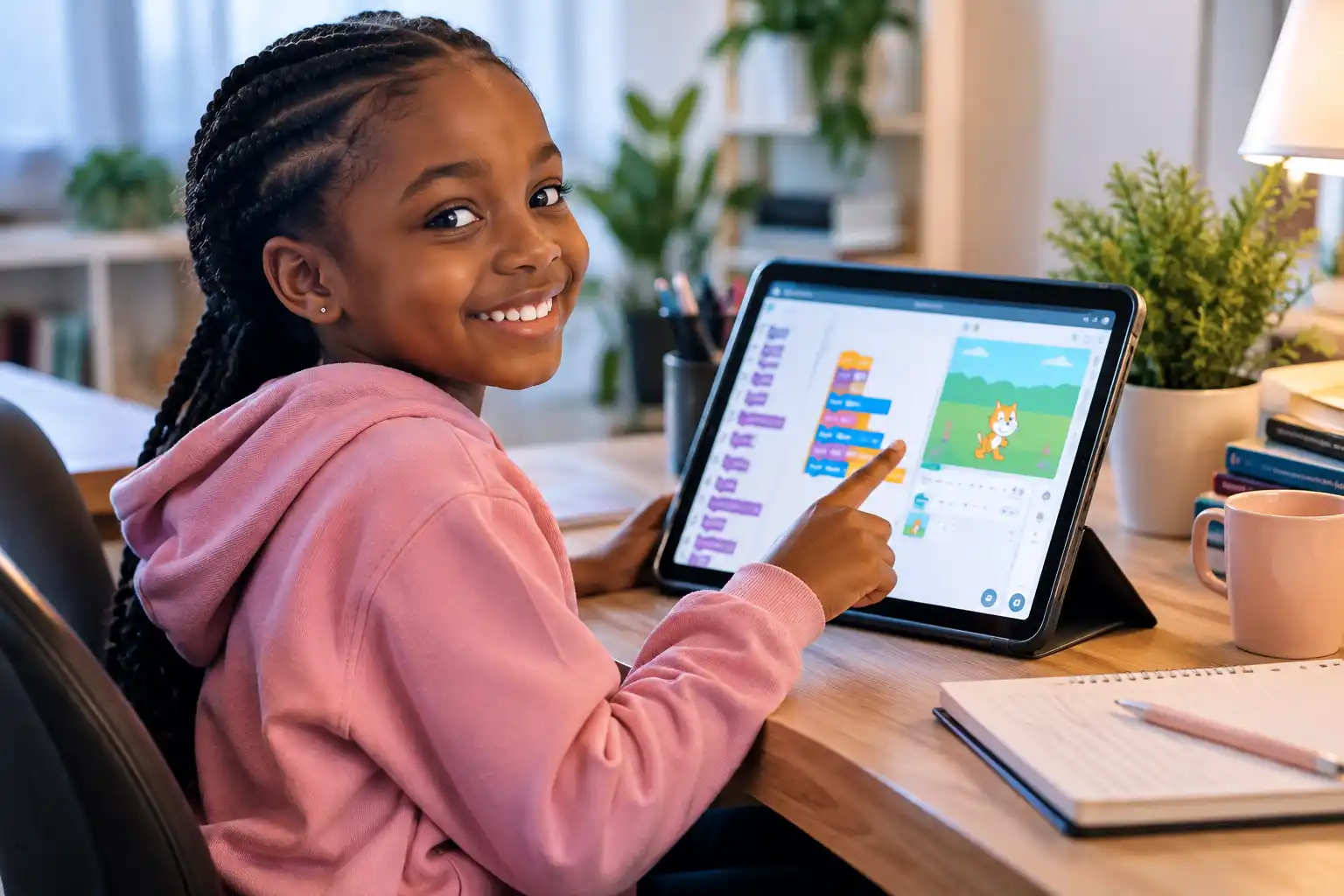
Visual block languages are undeniably the absolute best starting point for young beginners. For instance, platforms like Scratch allow kids to drag and drop colorful command blocks. As a result, they completely bypass the frustrating syntax errors found in typed languages.
Furthermore, these visual systems provide immediate, satisfying feedback for the young learner. When a child connects two blocks, their digital character instantly moves across the screen. Therefore, this instant gratification builds massive confidence and encourages further technical exploration.
Transitioning to Text-Based Code
Eventually, older children will naturally outgrow the limitations of visual block programming. When this happens, transitioning to text-based languages represents the next exciting step forward. For example, Python is widely considered the best introductory typed language for teenagers.
Python uses simple, highly readable syntax that closely resembles plain English. Consequently, teens can easily understand what their written scripts are actually executing. Moreover, mastering Python opens up advanced pathways into artificial intelligence and web development.
The Best Age to Introduce Coding for Kids
Many parents frequently wonder when they should officially start teaching their kids these skills. Surprisingly, you can effectively introduce coding for kids as early as five years old. However, you must use age-appropriate tools to ensure they actually enjoy the learning process.
For young children, visual block-based platforms are absolutely perfect for foundational learning. These intuitive platforms allow kids to snap colorful blocks together to create simple animations. Therefore, they learn foundational logic without needing to type complex text commands.
Furthermore, as children grow older, they can smoothly transition to robust kids programming
You may also like :
Artificial Intelligence and Technology: A Simple Guide for Beginners,
AI for Small Businesses: 10 Ways to Save Time
Screen-Free Alternatives for Toddlers
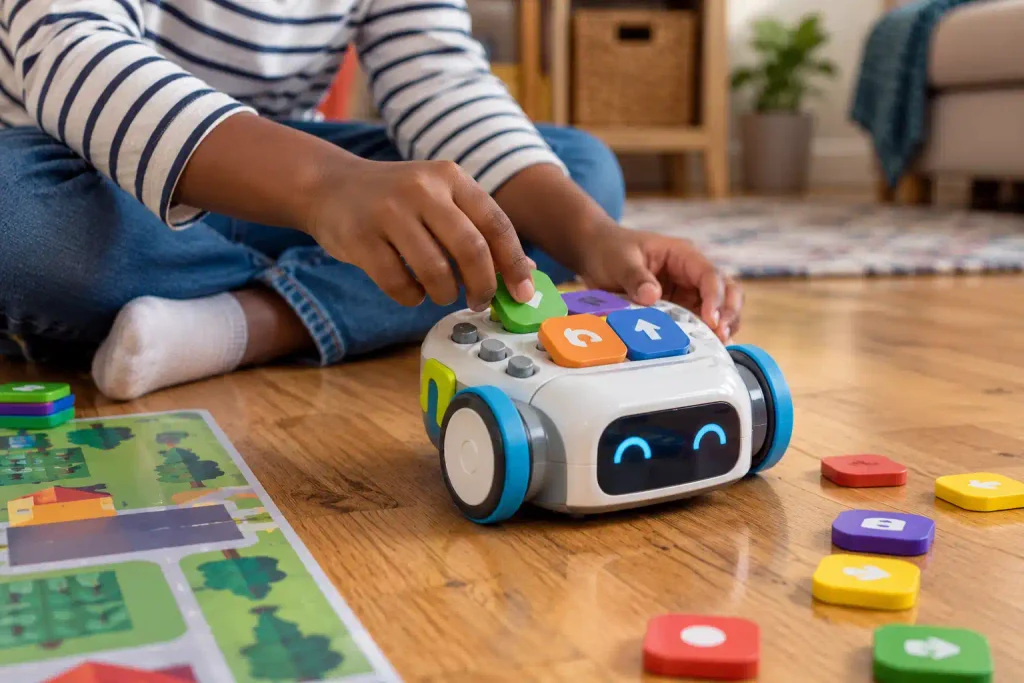
Interestingly, you do not even need a computer to start teaching basic logical concepts. In fact, many excellent screen-free toys effectively teach foundational programming logic to toddlers. For example, directional board games and programmable robot toys are incredibly popular options.
Additionally, simple physical activities can easily demonstrate how algorithmic sequencing actually works. You can give your child exact, step-by-step instructions to navigate around the living room. As a result, you effortlessly introduce coding for kids long before they ever touch a keyboard.
How to Keep Children Engaged in Tech
Maintaining a child’s interest in technology requires a careful, balanced approach. First and foremost, you must always prioritize fun and playful exploration over strict academic outcomes. Therefore, coding for kids should always feel exciting, rewarding, and pressure-free.
Furthermore, you should actively encourage kids to collaborate on projects with their friends or siblings. Consequently, this social aspect makes the learning process much more enjoyable and dynamic. In addition, working together naturally builds valuable teamwork and communication skills.
Moreover, you should always celebrate their small victories and unique creative ideas. When they successfully animate a character, genuinely praise their hard work and dedication. Ultimately, positive reinforcement ensures they continue exploring technology with wild enthusiasm.
Integrating Interests and Passions
The easiest way to maintain engagement is by connecting technology to their existing hobbies. For instance, if your child loves space, have them build a simple rocket ship game. Therefore, they immediately see the personal relevance of what they are learning.
Additionally, music lovers can write simple programs that generate customized digital beats. Sports fans can easily create digital scoreboards or basic interactive sports games. Consequently, coding for kids becomes a powerful extension of their favorite personal passions.
Conclusion: Start Coding for Kids Today
In conclusion, the benefits of early technical education are truly impossible to ignore. From building vital cognitive skills to preparing for future careers, coding for kids is highly essential. Furthermore, it empowers children to become confident, creative creators in a rapidly changing digital world.
Therefore, you should not wait for their school to introduce these vital concepts. Instead, take proactive steps today to start their exciting technical journey at home. Ultimately, teaching coding for kids is one of the absolute best investments you can make in their future.
Are you ready to give your child a massive head start in life? Share this article with other parents who want to prepare their children for the digital future! Also, leave a comment below with your favorite tech toys, or contact our team to learn more about our interactive technology courses.